
Can You Identify Kennel Cough Symptoms?
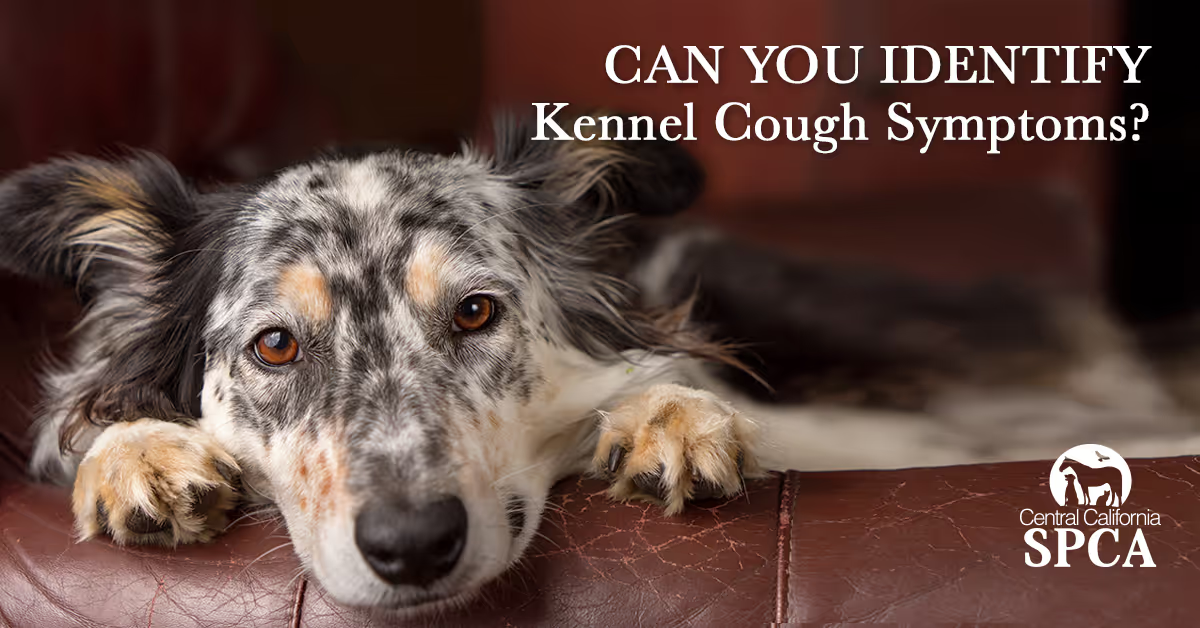
Dogs do lots of funny things and make plenty of funny noises, but if your dog is repeatedly coughing, it may be cause for concern.Dogs don’t normally cough in a continual manner, and constant coughing may be a sign of kennel cough.That’s what we’ll be covering today. If you think your dog may have kennel cough, it’s important to be able to recognize kennel cough symptoms, as well as to understand what you’ll need to do to help your furry friend.Today you’ll learn:
- What kennel cough is and where it comes from
- How to recognize kennel cough symptoms
- The risks presented by kennel cough
- What to do for your dog (diagnosis and treatment)
So let’s get started!
What Is Kennel Cough? Where Does it Come From?
Kennel cough, otherwise known as canine tracheobronchitis, is a respiratory disease that is often caused by Bordetella bronchiseptica m bacterium.Kennel cough is much like a human “cold,” in that dogs typically contract it through coming into contact or being in close proximity to an infected dog. Most often, the Bordetella bacterium is inhaled and contracted by dogs with compromised immune systems. A dog’s immune system is most often compromised by cold temperatures, malnourishment, exposure to excessive dust or smoke, and stress.It is also common in dogs kept in poorly ventilated areas where an infected dog is (or was recently) present. These conditions are most often found in kennels and shelters, hence the common name.
Recognizing Kennel Cough Symptoms and Risks
Kennel Cough Symptoms
If your dog is coughing, it may not be kennel cough. However, it’s fairly easy to discern in most cases. The symptoms of kennel cough are as follows:
- Strong, persistent coughing - sounds range from a dry hack to the honk of a goose, which is very common. It’s this unusual sound that first draws most dog owners attention to the other symptoms.
- Eye/nasal discharge
- Retching
- In severe examples - loss of appetite, fever, lethargy
Now that we’re able to recognize kennel cough symptoms, let's take a look at the potential risks associated with the disease.
Risks Associated with Kennel Cough
While some kennel cough symptoms will resolve themselves, dogs with highly compromised immune systems may not recover on their own, and the disease may progress to a more severe state.More severe issues usually result from secondary infections and are not directly associated with what is causing your dog’s kennel cough symptoms.In these cases, it’s possible for the dog to develop pneumonia and even be at risk of death. For these reasons, it’s imperative that you see your vet when symptoms develop and return if your dog’s symptoms don’t improve.
Diagnosis and Treatment
Now that you know all about kennel cough symptoms and the risks involved with the disease, it’s time to decide how to help your dog.
Diagnosis
The diagnosis given by your vet will be determined by your dog’s symptoms and recent exposure to other dogs, kennels, etc. Your vet will likely order at least one of the following tests:
- Blood chemistry
- Blood cell count
- Urinalysis
- Fecal exam
- Chest X-rays
If the dog’s symptoms don’t begin to improve, expect further testing to determine if the culprit is a virus or bacteria.
Treatment
Depending on the severity of a cough and the longevity of your dog’s current symptoms, treatments will vary. Most cases, if left untreated, will resolve themselves. If there is a concern about your dog's discomfort or the kennel cough symptoms aren’t going away on their own, other measures may be taken.
- Antibiotics will be given to eliminate any present bacterial infection.
- Cough suppressants will be given for coughs that don’t produce anything (mucus, phlegm, etc.)
- A humidifier may ease kennel cough symptoms, as well as walking with a harness instead of a collar.
Most cases resolve in 7-10 days, and some may take up to 3 weeks. Puppies and elderly dogs may take as much as 6 weeks to fully recover.
Prevention
The easiest way to prevent your dog from contracting kennel cough is to keep them away from other dogs and areas where dogs frequent. While this may be an option for some dog owners, for most it is not.
- Dogs can (and should) be vaccinated against the disease once a year. Dogs at a higher risk, those that are around other dogs and areas where dogs frequent, may benefit from nasal and oral vaccinations every 6 months.
- Areas where your dog may be boarded or attend doggy daycare, should provide thorough, frequent cleanings of their facilities and a proof of vaccination requirement for all dogs in their care.
That said, the vaccine isn’t foolproof, and infection may still occur. Kennel cough is one of the most common diseases a dog can contract, and many will have to deal with it at least once in their life.
Is it Something Else?
Kennel cough is a self-limiting disease, which means it typically clears up on its own. If it doesn’t, your dog may have a secondary infection or the problem could be something completely different.
- Dogs with heart disease cough after exercise or excessive stimulation.
- Tracheal collapse can cause coughing when drinking water and pulling on the collar.
- Paralysis of the larynx is something that can happen to large dogs.
- Inhaled objects such as seeds, burrs, or grasses can cause irritation and hacking/coughing.
- Dogs, like humans, can develop allergies.
- Any smoke exposure can trigger serious bouts of coughing and sneezing.
Be in the Know
If you suspect your dog has kennel cough, be sure to keep them away from other dogs until you can confirm the diagnosis and begin treatment.Now that you know and understand kennel cough symptoms be sure to take the appropriate measures and do what you must to help your dog.

Make a Difference, Donate to CCSPCA Today!
By donating to the CCSPCA, you are directly supporting our mission to provide programs and services that serve all stages of an animal's life. Your contribution helps us continue our work in adoptions, rescue, foster care, outreach, humane education, veterinary services, spay/neuter programs, and more.
Join Us and Help Save Animals' Lives
The modern facilities and our caring staff offer safe refuge, nourishment, medical care, and love to every animal in our Animal Center. Learn how you can get involved with CCSPCA by volunteering, donating, or fostering.
Stay Connected with Our Newsletter
Get the latest updates and news from CCSPCA
Visit us at: 103 S. Hughes Ave, Fresno CA 93706
Call us at: 559-233-7722