
How Cold Is Too Cold For a Dog & How to Keep Them Safe
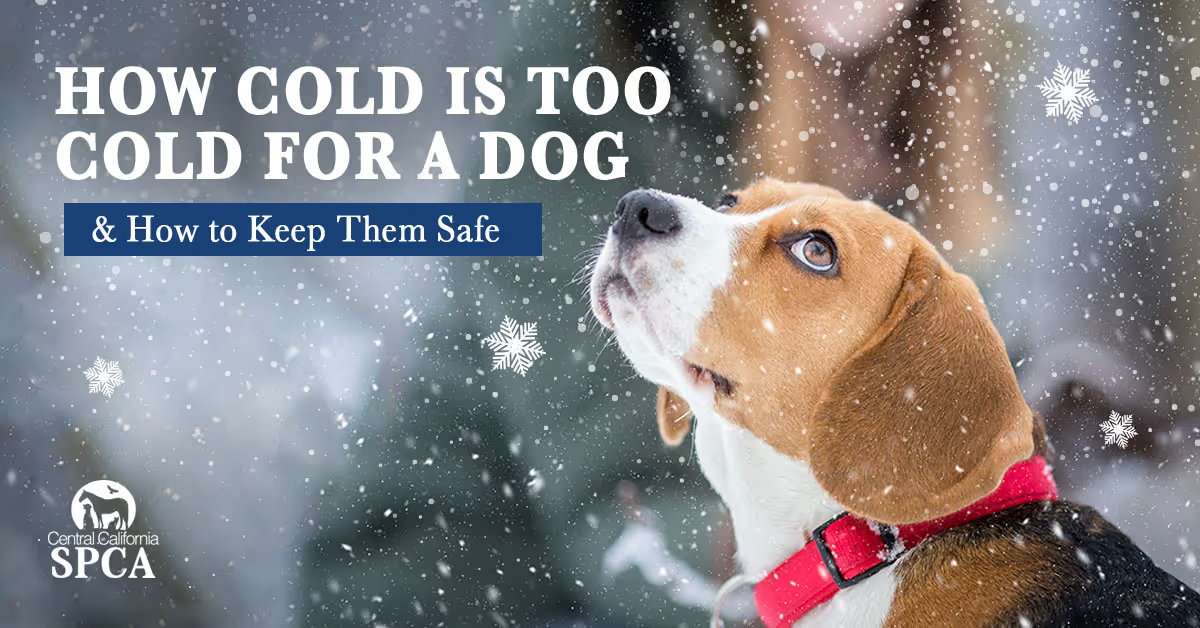
Winter is here, which means the weather is cold, wet, and snowy. Now is the time to prepare to keep your dog safe during the cold winter months, and we’ve put together a guide to help you do just that.
How Cold Is Too Cold for a Dog
We’d like to start by saying that not every dog is susceptible to cold. In fact, there are quite a few variables: coat type, coat color, size, weight, overall health and conditioning, and age. Then there is the type of cold. Is there a wind chill factor, is it wet or snowing, is there cloud cover that restricts sunlight? (Just to name a few)There are a number of dog breeds that thrive in the cold. Think about Alaskan Malamutes, Siberian Huskies, Newfoundlands, and Bernese Mountain Dogs. Their size and type of coat help protect them from extreme elements, but how cold is too cold for other breeds?Once the mercury starts to dip below 45 degrees, you’ll begin to see the adverse effects weather can have on dogs, particularly small short haired breeds, elderly dogs, or those with health conditions. In most cases, the effect will be slight. Provided they are equipped the right shelter, all dogs should be fine in this type of weather.Anything below 32 degrees is where you really want to start paying attention to signs of shivering, anxiety, lack of movement, whining, and general malaise. Once the temperature gets below 20 degrees, there is the potential for hypothermia and frostbite.
Winter Health Risks for Dogs
Cold weather can adversely affect your family pet in ways you might not imagine. Let’s take a look at some of the issues that can arise or be exacerbated by cold weather.
Dog Arthritis
Just like humans, older dogs often have arthritis. Arthritis is more noticeable during the colder weather. Joints become stiffer and limit mobility. You may need to cut down on long walks, let your pet spend more time indoors, or consult your vet for appropriate treatment.
Hypothermia in Dogs
Once a dog’s body temperature gets to a certain level, hypothermia begins to set in. The temperature and duration of the cold weather can result in either mild, moderate or severe hypothermia. This condition can affect blood flow, heart rate, breathing, and in severe cases, loss of consciousness and death. Symptoms include weakness, shivering, lack of mental acuity, muscle stiffness, and shallow breathing. If you suspect your dog has even a mild case of hypothermia, consult your vet immediately.
Frostbite in Dogs
Frostbite occurs most often on paws and is a result of ice balls. Sweat glands in a dog’s paw release moisture and can freeze in colder weather, which is how ice balls form. They can cause your dog to limp or hop; prolonged walking can cut into or bruise the dog’s foot. Beware of frostbite on tails and ears as well. They will become pale and may turn hard.
Protecting Your Dogs from Rock Salt
Rock salt is a staple to any resident who lives through snowy winters. While it is an easy and economical way to lower the freezing point of water that forms ice,the coarse salt can get stuck in between paws and cause irritation. Make sure you rinse and dry your pet’s paws when they come in from any area that’s been salted, and that they drink plenty of water in case they were trying to lick out the offending salt crystals. (Note: There are pet-safe de-icing salts available.)
Protecting Your Dogs from Antifreeze
Another winter must-have, antifreeze is sweet-smelling and can be an attractant to your pet. Beware, as it is toxic and even ingesting a small amount can be lethal. Consult your vet or call the ASPCA Poison Control Hotline number available for just such an emergency: 1 (888) 426-4435.
How to Keep a Dog Warm in Winter
To keep your pet safe during the winter, there are tips and tricks you can implement.
Limit Outdoor Time
Limit the time your dog spends outside when the temperature drops, particularly if you’re experiencing wind chill factor, heavy rain, or snow. Try to take your daily walk(s) during the daytime while the sun is shining. Keep a towel by the door, so that when you return home, you can wipe off paws or any lingering wetness or mud.
Dog Grooming in the Winter
Minimize the time between baths. Bathing not only can lead to chills, but it removes essential oils that your pet needs to help stay warm during cold winter months. Also, resist the temptation to shave your dog or trim their coat too much. Just trim any hair that gets wet during walks, including the hair between toes.
Dog Coat
If your dog isn’t blessed with the thick fur of a Malamute or Husky, they may require a sweater or coat when they venture outside. Make sure that any apparel goes from just past the collar to the base of the tail and completely covers their underside.
Get Dog Booties
If your pet has tender paws or the paws have been irritated due to salt or extreme temperature, consider purchasing booties. They will provide the coverage your pet needs to avoid further injury and means you won’t have to clean their paws after every walk.
Get a Winter Dog House
If your dog spends any time outside, other than to do their business, providing respite from the cold is a must. This means a winter dog house or some sort of outdoor shelter. Depending on winter conditions, you’ll want to factor in the following:
- Elevation: Because the ground gets very cold in winter, elevating your dog house is a good idea. If it doesn’t already have legs, you can elevate with large stone pavers placed on each corner or place it on a wooden deck.
- Insulation: Thick carpeting, a cushy dog bed, blanket, or other insulator on the floor of the dog house will make your dog more comfortable and help take the chill off.
- Waterproofing: Make sure that the roof and joints of your dog house do not leak. A wet dog and wet bedding are a sure way to allow hypothermia to take hold.
A good rule of thumb to protect your pet during winter time is that if it’s too cold for you outside, then it’s probably too cold for your pet. Make sure you protect them this winter with our helpful tips and we hope we’ve answered your question, How Cold Is Too Cold for a Dog.


Make a Difference, Donate to CCSPCA Today!
By donating to the CCSPCA, you are directly supporting our mission to provide programs and services that serve all stages of an animal's life. Your contribution helps us continue our work in adoptions, rescue, foster care, outreach, humane education, veterinary services, spay/neuter programs, and more.
Join Us and Help Save Animals' Lives
The modern facilities and our caring staff offer safe refuge, nourishment, medical care, and love to every animal in our Animal Center. Learn how you can get involved with CCSPCA by volunteering, donating, or fostering.
Stay Connected with Our Newsletter
Get the latest updates and news from CCSPCA
Visit us at: 103 S. Hughes Ave, Fresno CA 93706
Call us at: 559-233-7722