
Is Bathing a Cat Really Necessary (or Just a Myth in Caring for Pets)?
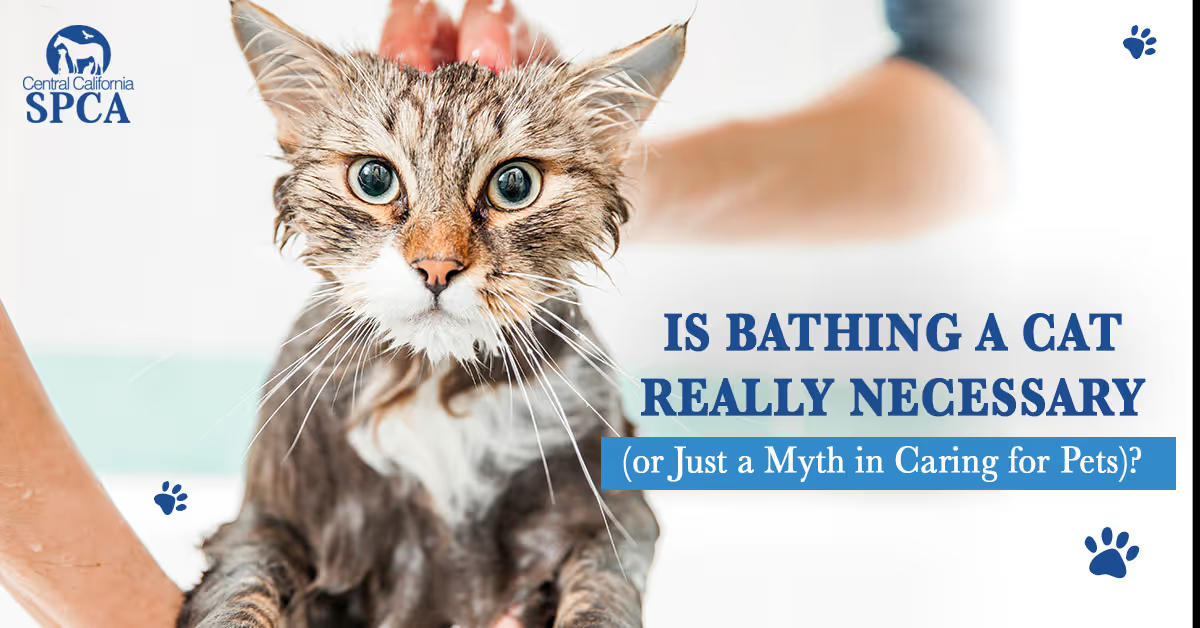
We’ve all heard the stereotype that cats hate water. We’ve been led to believe our furry feline friends want nothing to do with water – aside from drinking, of course, which they seem to prefer to do from the toilet bowl. So when it comes to the thought of hygiene for a cat, many people scratch their heads or even find the idea a bit humorous.
If you have a cat that seems to flinch at the sound of a faucet turning, then why would you think that bathing a cat would be a good idea? We may sometimes want to dress them up (whether they cooperate or not) or give them human names, but in the end we have to realize they are not human. So perhaps they don’t quite need to mimic everything we do. Do cats really need baths?
The simple answer is, as a general rule of thumb, no. But there are exceptions.
With all that internal dialogue you had before arriving on this page, bathing a cat may have sounded like a nice or cute to-do, but surely not a necessity. So it may surprise you to learn that there are times that a bath actually might be good for your feline friend.
Bathing a Cat: When Does it Become Necessary?
We know you love your fluffy family member, so keep on reading because there are a good deal of exceptions to be aware of! Let’s debunk:
One Main Reason Bathing a Cat Can Be Essential: Situational
Cats can sure be adventurous at times. This is not necessarily a bad thing, as it is instinctual! However, it may not be long before they get themselves into a sticky situation. Some of the most common are:
- If the cat gets into something and smells, for example if they were sprayed by a skunk. In this case you’ll want to skip the tomato juice everyone talks about and try this instead:
- Stir together 1 teaspoon of liquid dishwashing soap (we recommend blue Dawn), 1/4 cup baking soda, and 1 liter of white vinegar. Vinegar is the best base – stronger than water but not harmful like peroxide, which can cause bleaching.
- Gently rub the mixture into your cat’s fur, being careful not to get it in the eyes or ears, and rinse thoroughly with water.
- If the cat becomes uncomfortably dirty or sticky, due to getting into the trash, scrounging around in discarded food, or from some outdoor encounter with sap, mud, oil, or toxic elements. Cats will often try to self-clean, but then that begs the question, do you really want your pet ingesting everything that can be found in the hair? Plus, that dirt and residue isn’t going to be compatible with your clean carpet and light-colored upholstery.
- If the cat picks up bugs in its fur, which can not only be a rather unsettling thought for you as an owner, but is also an incredible nuisance to your favorite feline. Even if you are able to get past the utter cringe-worthy thoughts that come with the creepy-crawlies, your cat could be suffering, as some of the most common pests – fleas, mites, ticks, lice – feed on blood and could cause irritation, infection, or disease.
A bath can wash away a more superficial visit from these pests, but if they are starting to really dig in (especially if they seem engorged in your pet), a visit to the vet is best, as special shampoo, removal, or medicine may be necessary.
In these cases, it is in you and your cat’s best interests to clean them yourself or get them professionally bathed as soon as possible, by any means necessary! You’ll thank yourself because you’ll have peace of mind that nothing is crawling on you, that your furry friend is healthy and comfortable, and that your home will not become a mess.
There are still, however, other reasons not to overlook bathing a cat when it comes to more specialized areas of caring for pets – sometimes it depends on the cat more than the obvious situational or event-based needs.
The Other Main Reason Bathing a Cat Can Be Essential: Cat Breed
You can usually tell if someone needs a bath – anyone really, whether it’s a cat, dog, or a child. An unpleasant odor is a telltale sign that they’ve gotten into something. It’s a whole other story when it comes to particular breeds or conditions that will actually need a regular bathing routine to stay healthy. Here are some cases where bathing becomes necessary:
- If your cat has particularly long hair – for example, when it comes to breeds like Persians – keeping the fur clean may be more than a cat can handle on its own (regardless of their self-grooming habits and abilities).
- When it comes to cats with less fur, or no fur – such as the Sphynx, which is completely hairless – periodic baths are indeed needed in order to remove body oils.
- There are also medical reasons why your cat could require a bath: It may prove to be quite the challenge for cats that are elderly, obese, arthritic, or have mobility issues to perform a basic cleaning on themselves. The back half of the coat of some of these cats can often become matted, allowing the delicate skin to become itchy and flaky.
When your cat is a special case and needs help to effectively keep up with all the necessary grooming – due to health issues or even due to hair and skin type – we encourage you to use our guide below in your mission to keep your cat healthy and happy.
Supplies You Need When Bathing a Cat
It can become quite the remarkable feat to bathe your cat – let’s say it probably won’t be the easiest thing you do all day. However, being prepared with all the key supplies will help to give you a leg up and make the process easier:
- Grab a few cotton balls to do some ear cleaning. You’ll want to remove not only any buildup of what is naturally inside the ear, but also soak up traces of water or cleaning solution that may have gotten inside. Keeping things out of the ear canal will prevent infection of the inner ear. (Note: Never stick a Q-tip inside the cat’s ear, as it can cause damage.) Be mindful of your cat’s behavior during this process. Forcing them to do something they clearly don’t want to do can cause stress and injury — to you or the cat.
- If the cat is soiled in something particularly unpleasant or a possible irritant, you may opt to use gloves to protect your own skin. Long sleeve shirts will also help protect you, too.
- Choose a gentle, approved cat shampoo. If you’d rather go for a natural DIY mixture, make sure you do your research to find safe ingredients beforehand. Although you may find it fun to use a shampoo with a nice scent, it is often better to find an unscented one. Keep in mind that just because you like something doesn’t mean your cat will, especially when strongly scented shampoos can linger for several days.
- A non-skid surface to place down in order to prevent slippage – you might want to invite a friend to assist, as they can hold the cat while you scrub and pour the water, which creates a safe environment that is in everyone’s best interest.
- A small pitcher to pour warm water over your potentially nervous pet.
- Treats or your cat’s favorite approved calming substance for distraction purposes and to make the experience as easy as possible.
- Plenty of towels – you may think one will be enough, but if the cat gets spooked at any point things could get a little messy, and fast. Remember you’ll be in the splash zone throughout the entire process.
Now you have your supplies but you may still be wondering: how in the world does one go about facilitating the bath? Follow these steps and it should prove to be much less “scary” than the cliches claim – you and your cat may even find the process to be somewhat enjoyable. Who would have thought?
Steps to Ensure Bathing a Cat Is a Success Every Time
Here’s how to go about bathing a cat, so it’s not a nightmare for either of you. Do it right, and it doesn’t have to be an unpleasant experience at all. Just take care of your movements and make sure to get a read on how your cat is feeling so you know what he or she is comfortable with (or when the cat has simply had enough). Additionally, the younger you start bathing them, the more they’ll get used to it. We highly recommend implementing bathing into a kitten’s routine so they’ll grow to learn it isn’t abnormal.
- You may want to trim your pet’s nails before the start of the bath.
- Lay out all your supplies in advance so you don’t test the cat’s patience and have to constantly get up to grab items every time you need something from our list.
- Choose a sink or tub and make sure the water is at a moderate temperature – you’ll want it warm but not scalding, and they will not be happy with water that is too cold. Use your judgement on this, try to think of what you would like if it were you or an infant in the tub. Arthritic cats might enjoy a slightly warmer bath than other cats as it can help soothe aches and pains.
- Start with your pet's head, taking extra care not to get any product into the eyes, ears, nose or mouth. Rub the cleaning agent into your cat’s coat, in slow circular motions or whatever feels comfortable and does not seem to upset your cat.
- Wet down your cat from the back of the neck to the tail, avoiding sensitive areas on the head as previously mentioned, then lather. Be sure – again, if your cat permits – not to miss areas such as the belly, under the arms and legs, behind the ears, and even the tail. (Think of it this way: virtually anywhere there is fur or skin can harbor something.)
- Be sure to rinse your cat well and then dry them as quickly as possible so the cat does not become cold. Your pet can be left to air dry, but try not to make this the main method of drying, especially in the winter months. Soak up as much water as you can from the coat using the towel.
Other Hygiene Needs in Caring for Pets: Grooming a Cat
So, you’ve made it this far – congratulations! You now have a clean cat (and hopefully aren’t too scratched up, yourself). Bathing a cat is not the only grooming to consider, though, when caring for pets. Grooming a cat can and should involve other categories, such as nail care, cleaning of the inner ears, brushing of the coat, dental hygiene, healthy paw pads, and more. These don’t all have to be done on bath day, and are probably best left to another time to avoid additional stress.
If you’re not comfortable with taking care of these other areas in regards to grooming a cat, not to worry. Often you’ll be able to find a professional grooming service that is local to you. We suggest looking online and comparing prices. Some veterinarians will also offer these services, but that can sometimes be a bit on the pricier end since they are also medical professionals.
What We Learned in Debunking the Myth
While there will always be people that believe the stories about how cats will stay away from water at all costs, we now know that putting a cat in water isn’t cruel and can actually be very beneficial. And, sometimes, absolutely necessary.
When it comes to their overall health, cat owners will do just about anything for their pets. Bathing may not be your cat’s favorite thing to do and they may hesitate as first, or even give you a little bit of trouble during the process. If you can manage to keep them calm though, make slow, calculated movements, and pay attention to their needs and feelings, it can go surprisingly smoothly.As always, feel free to contact us with any questions about caring for pets, as there are so many different things that can go into it! You can also see further information in a handy guide here about cat care in particular.

Make a Difference, Donate to CCSPCA Today!
By donating to the CCSPCA, you are directly supporting our mission to provide programs and services that serve all stages of an animal's life. Your contribution helps us continue our work in adoptions, rescue, foster care, outreach, humane education, veterinary services, spay/neuter programs, and more.
Join Us and Help Save Animals' Lives
The modern facilities and our caring staff offer safe refuge, nourishment, medical care, and love to every animal in our Animal Center. Learn how you can get involved with CCSPCA by volunteering, donating, or fostering.
Stay Connected with Our Newsletter
Get the latest updates and news from CCSPCA
Visit us at: 103 S. Hughes Ave, Fresno CA 93706
Call us at: 559-233-7722