
My Dog is Coughing - Should I Be Worried?
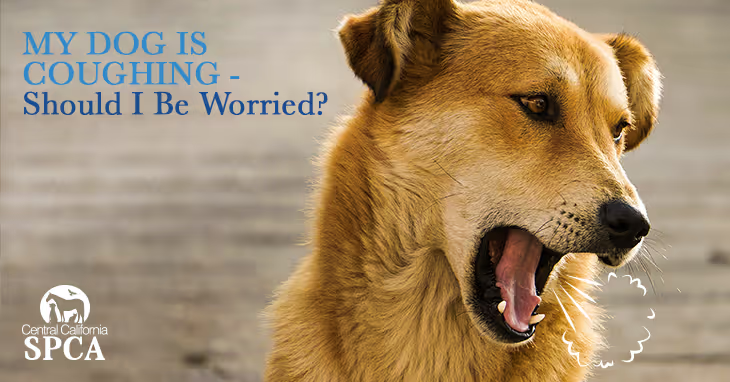
If your dog is anything like the ones that we see every day, he probably does some pretty funny things, some of which may be downright weird. Rest assured, it’s all pretty normal and one of the fun parts of being a dog owner. However there will be those times when your dog starts displaying abnormal behavior that may be cause for concern, and in those cases it’s important to know how to respond.
One particular behavior that frightens a lot of dog parents is coughing, so we’re going to cover everything you need to know about about different types of coughs and how to help your furry family member through them.
My Dog is Coughing? Why?
Let’s start with a disclaimer: Not all coughing is a sign that your dog is sick. Dogs can cough from eating or drinking too fast, inhaling something like pollen or dust that irritates the nasal passageway, or even because their breed is more prone to it. You’ll also want to be able to recognize each of your dog’s symptoms before you jump to any conclusions. This will help you and your veterinarian to determine the severity of the problem at hand.
You should be able to tell your vet a few things about your dog’s cough, including if it sounds dry or wet, when it began and how often it is occurring, if there is any accompanying discharge being hacked up (blood or mucus), and if it happens more when he eats or during the night. With this information they will be better equipped to help your dog deal with any of the following common causes of coughing in dogs.
Kennel cough (bordetella)
Kennel cough is far and away the most common disease that could be causing your dog’s new symptoms. If you’ve recently boarded your dog and now have a hacking pooch, where they were otherwise healthy before, ask your vet about kennel cough. Fido could have contracted their infection from an up-close-and-personal encounter with a group of dogs (think dog park), so don’t rule it out based on the disease’s name.
If your dog has contracted kennel cough, don’t fret. Most healthy dogs will recover without medical intervention in 2 to 3 weeks. Puppies, senior dogs, and others with suppressed immune systems may take up to twice as long and your vet may recommend medication if they don’t seem to be recovering on their own.
Dog flu or pneumonia
Is your dog’s cough wet? Does it sound like they are gargling? Is he coughing up phlegm?
Mild symptoms may point toward dog flu (canine influenza) and a more severe presentation of these symptoms could mean pneumonia.
While it’s possible to resolve kennel cough without medication, pneumonia may require immediate treatment including fluids and antibiotics. Don’t hesitate, seek medical attention immediately. The sooner you begin treatment the more quickly your dog will be able to make a full recovery.
Distemper
Distemper—an airborne virus—is another very serious disease that requires immediate medical attention. In addition to coughing, dogs may run a fever, have red eyes, be quite lethargic, and have diarrhea and/or loss of appetite. If your dog is coughing and also has thick mucus coming from his eyes and nose, see your vet immediately.
Tracheal collapse
More common in small breeds, tracheal collapse is progressive and can either be acquired or congenital (something they are born with). The most outstanding and unique symptom of tracheal collapse is a cough that sounds like a goose honk. It may sound funny, but your little dog will likely need medical management or even surgery to help them deal with this issue. Your vet may also recommend cartilage building supplements to help stabilize your dog’s trachea.
Reverse sneezing
Breeds with short, flat noses (brachycephalic) are prone to a condition called reverse sneezing. While it is a genuine sneeze rather than a cough, the sound it makes can easily be confused. These sneezing fits can be alarming but usually require no treatment. However, you will want to keep track of when they occur in order to help your dog avoid them whenever possible.
Foreign objects
Foreign objects can cause a whole host of problems. First of all, if your dog has something stuck in his throat he may be be hacking or gagging followed by an attempt to swallow. Obstructions like these can cause serious damage and should be investigated immediately. If your dog has inhaled something like a foxtail or other irritant, it can cause bouts of coughing as well. Either way, a foreign object in your dog’s nasal passages, throat, or lungs is a very serious matter and may require your veterinarian to remove it.
Parasites
Parasites, like heartworm and roundworm, may also be causing your dog to cough. Your vet will likely prescribe a dewormer to help alleviate the problem.
Heart disease
Congestive heart failure can cause fluid to accumulate in a dog's lungs, especially at night or when lying down for extended periods of time. This is a very serious issue and if your dog has this disease your vet can create a treatment plan that may greatly extend their life.
Avoid transmitting diseases to other dogs
If your dog is coughing, it’s probably best to keep them home until their vet has given them a clean bill of health. Some of the diseases listed above are highly contagious and transmitted easily to even the healthiest of dogs. You’ll feel better knowing that you’re keeping other dogs from getting sick and you’ll be able to bring your pooch back to the dog park before you know it.
When to take your dog to the vet
This article was written to educate dog owners about the types of canine diseases associated with coughing and the importance of monitoring your dog’s behaviors and symptoms in order to help your veterinarian make a diagnosis.
While some occasional coughing is normal, persistent coughing is not. No matter how serious the symptoms and how well you think you’ve diagnosed the problem, your vet is the only one who can determine a proper treatment protocol for your dog’s individual needs. Most of the diseases listed above are quite serious and require immediate medical attention in order to assure your dog makes a full recovery. Play it safe and be sure see your vet.

Make a Difference, Donate to CCSPCA Today!
By donating to the CCSPCA, you are directly supporting our mission to provide programs and services that serve all stages of an animal's life. Your contribution helps us continue our work in adoptions, rescue, foster care, outreach, humane education, veterinary services, spay/neuter programs, and more.
Join Us and Help Save Animals' Lives
The modern facilities and our caring staff offer safe refuge, nourishment, medical care, and love to every animal in our Animal Center. Learn how you can get involved with CCSPCA by volunteering, donating, or fostering.
Stay Connected with Our Newsletter
Get the latest updates and news from CCSPCA
Visit us at: 103 S. Hughes Ave, Fresno CA 93706
Call us at: 559-233-7722